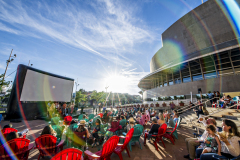
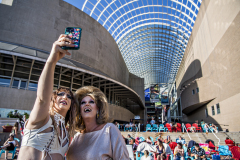
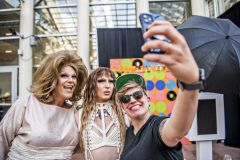
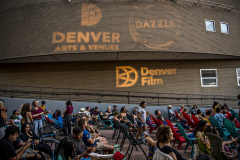
Our annual outdoor movie series, Sunset Cinema, returns for more family-friendly movies in Sculpture Park.
The 2025 lineup is finally here!

In the ever-evolving landscape of English-language entertainment, few words carry as much cultural weight, historical baggage, and contemporary fluidity as the term "ladies." It is a noun that seems simple on the surface—a plural form of "lady," typically denoting adult human females. However, when filtered through the lens of popular media—from Hollywood blockbusters and prestige television to viral TikTok skits and Billboard Top 40 lyrics—the meaning of "ladies" fractures into a spectrum of implications.
For example, in Bollywood-influenced English content (like The Archies on Netflix), "ladies" often carries a Westernized elite status symbol—modern, educated, and progressive. In contrast, in Nigerian Nollywood films that blend English with local languages, "ladies" can be a marker of urbanization, sometimes positive (career women) and sometimes negative (promiscuous or materialistic). In contrast, in Nigerian Nollywood films that blend
You’ll notice that serious dramas and documentaries about gender often avoid "ladies" entirely, using "women," "people," or "folks." Meanwhile, reality TV and game shows (e.g., The Bachelor , Love Island ) overuse "ladies" in a performatively polite but often condescending way. You weren't born a lady; you performed it
In this era, in entertainment content was synonymous with class hierarchy . You weren't born a lady; you performed it. Media taught women that their value hinged on being addressed as "ladies" in contrast to cruder "females" or "girls." Talk shows, variety hours, and early sitcoms (e.g., I Love Lucy ) used the phrase "ladies and gentlemen" as a binary cordon, policing gender expression and behavior. Part 2: The Feminist Rupture – From Politeness to Power The second-wave feminist movement of the 1960s and 70s fundamentally challenged the term. In English-language popular media, "ladies" became a battleground. Feminist critics argued that calling women "ladies" imposed restrictive codes—don't curse, don't be angry, don't be ambitious. In Fleabag (Amazon Prime)
Reality TV also played a role. The Real Housewives franchise (starting 2006) weaponized "lady" into a luxury brand. These "ladies" threw drinks, screamed at each other, and flaunted wealth—a far cry from Audrey Hepburn’s My Fair Lady . Here, the of "ladies" in English entertainment content became aspirational chaos . You could be a "lady" and still act outrageously, as long as you did it in designer heels. Part 4: The Streaming Era – Deconstructing the Gaze With the rise of Netflix, Hulu, and HBO Max, long-form storytelling has allowed for deeper interrogation of gendered language. Series like Fleabag , Killing Eve , The Crown , and Russian Doll use the word "ladies" with extreme intentionality.
The song "Ladies First" (Queen Latifah, 1989) had already set a template, but the 2000s solidified "ladies" as both a direct address and a demand for respect. Consider the opening of countless hip-hop and pop tracks: "Ladies and gentlemen…" quickly followed by "This one's for the ladies." In music videos, no longer meant prim and proper. It meant financially independent, sexually agentive, and unapologetically confident.
In Fleabag (Amazon Prime), the protagonist is never called a lady without irony. When her father says, "You're a lady," it’s a painful reminder of the propriety she has failed to achieve. In contrast, The Crown treats "ladies" as a constitutional role—a lady-in-waiting, a lady of the court—where the word carries institutional power but also imprisonment.
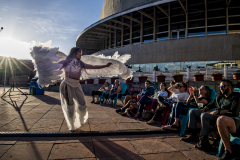


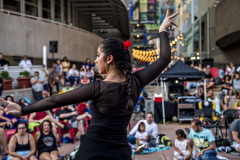
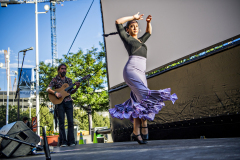




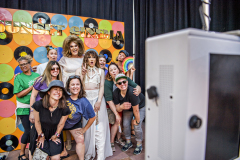








Photos Courtesy of Denver Arts & Venues
