Real doctors, nurses, and PAs work 12 to 28-hour shifts. They miss anniversaries, birthdays, and school plays. The “supply closet rendezvous” in reality is a 90-second cry or a quick sip of cold coffee. Romantic storylines in real life are not built on passion; they are built on understanding .
Is it harder than the TV version? Absolutely. Is it more rewarding? Immeasurably.
This article is not about the fantasy. It is a deep dive into the authentic intersection of stethoscopes and heartstrings. We will explore how real medical careers shape friendships, destroy marriages, forge unbreakable bonds, and occasionally—when the stars align—produce that would make TV writers jealous, but for all the wrong reasons. The "Grey’s Anatomy" Curse: What Media Gets Dangerously Wrong Let us start with the fiction. In primetime, medical professionals work in a single, pristine hospital wing. They have time for multi-episode love triangles. Interns date attendings without a single HR meeting. And the biggest relationship hurdle is a tragic tumor or a dramatic ambulance crash.
Here is the truth: Real medical love is not a storyline. It is a shift report. It is a hand squeeze before a difficult family discussion. It is the partner who knows that when you say “I’m fine,” you mean “I am one patient away from crying.”
Five years ago, Maya developed a post-viral syndrome that ended her career. She went from a scalpel-wielding surgeon to a woman who couldn’t stand for an hour. Most in media end with the dramatic illness. Ours began there.
We have all seen them. The impossibly handsome neurosurgeon whispering a diagnosis in a supply closet. The trauma nurse with perfect mascara locking eyes with a firefighter over a gurney. The slow-motion kiss in the rain after a miraculous code save.
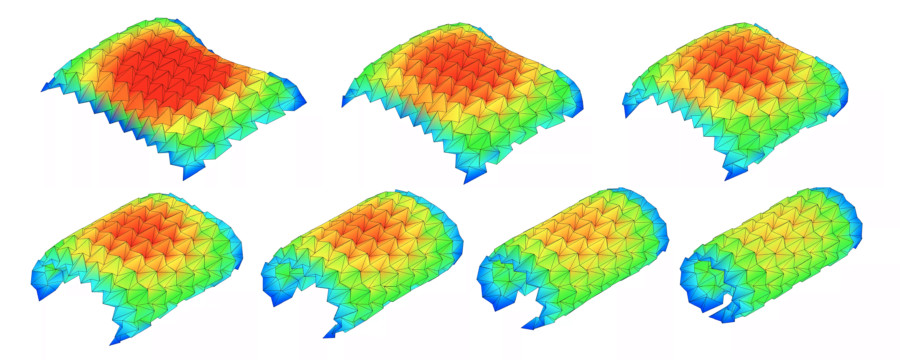
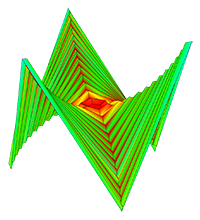
STRAIN VISUALIZATION
Cauchy strain or engineering strain is a unitless measurement of how much a material is being stretched or compressed under load.
The Strain Visualization illustrates the strain across an origami sheet by mapping it to a color from blue (no strain) to red (max strain).