1. Standard Oriya Keyboard Layout
High resolution image suitable for printing.
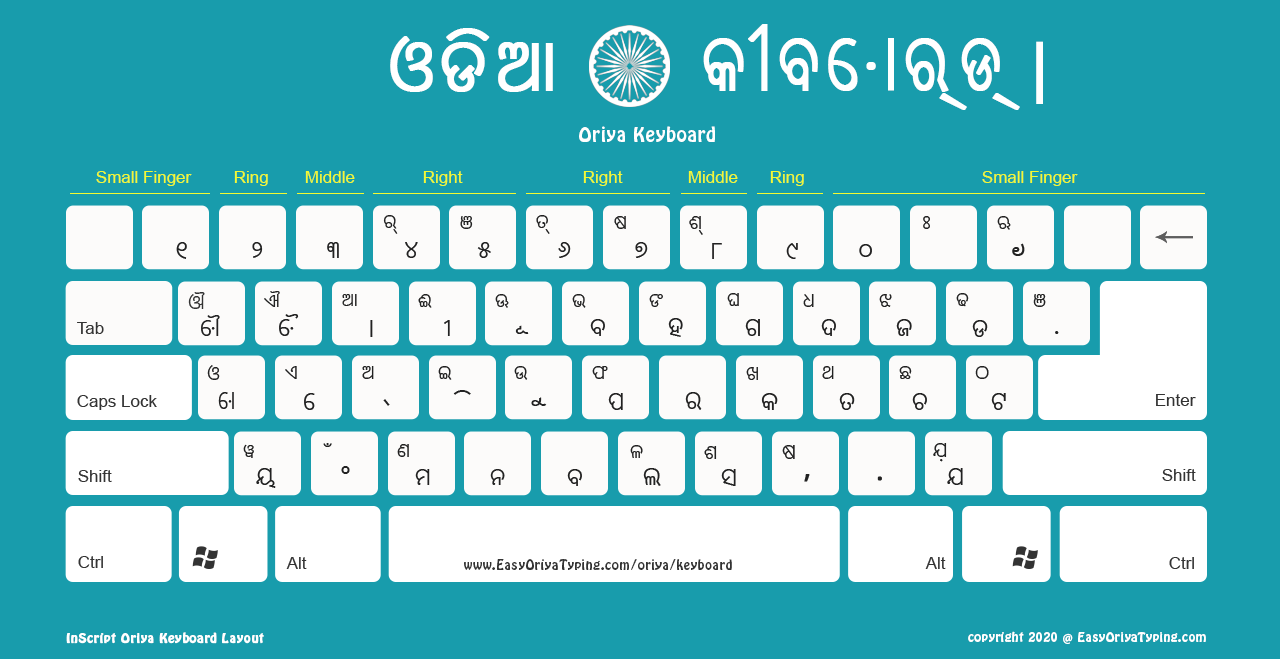
We have five different Oriya keyboard layouts for you to download on your computer. Once downloaded — you can use it as a reference to type in Oriya either on Word document or any other text editor. You also need to download the matching Oriya fonts.
High resolution image suitable for printing.
High resolution image suitable for printing.
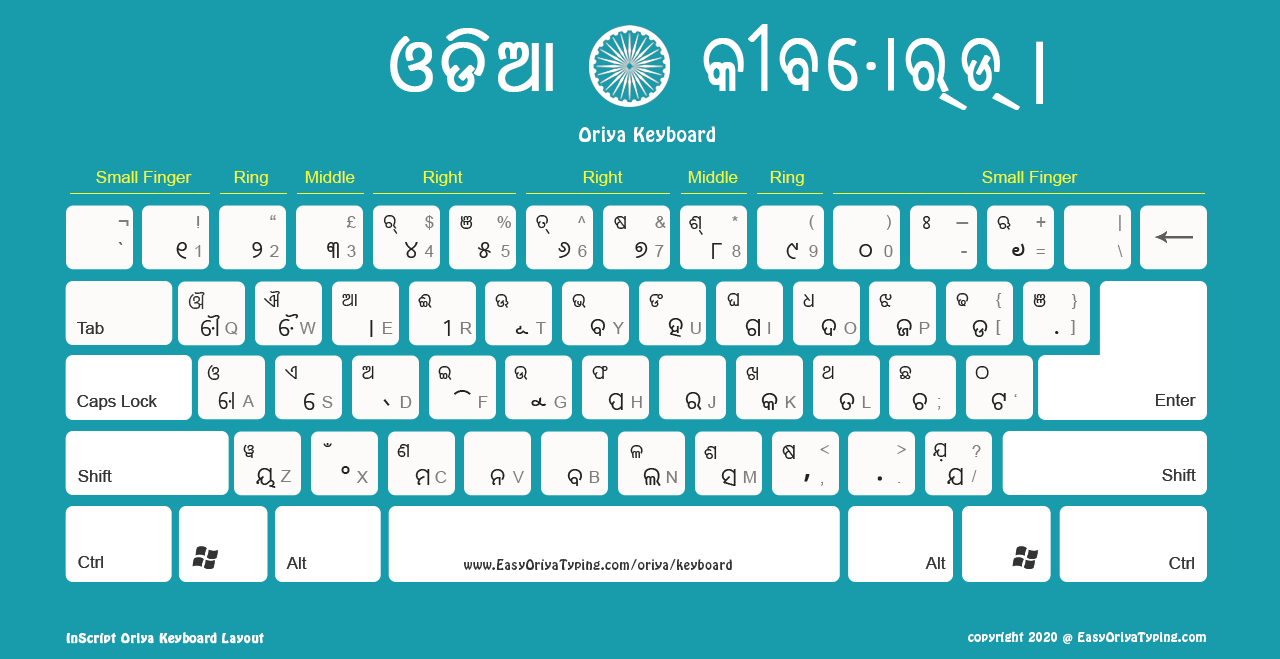
High resolution image suitable for printing.
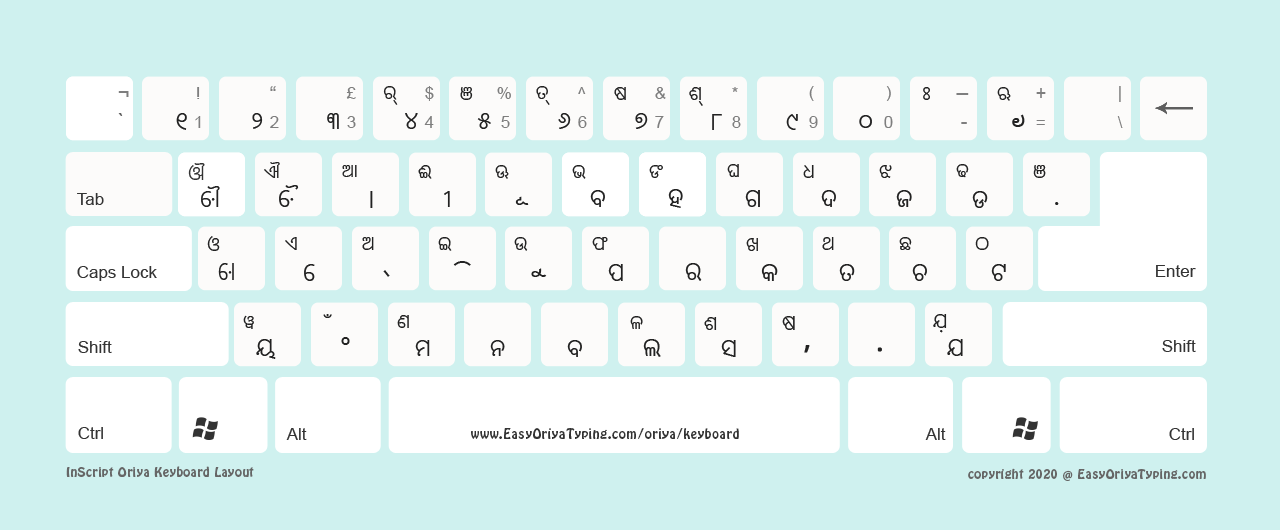
High resolution image suitable for printing.
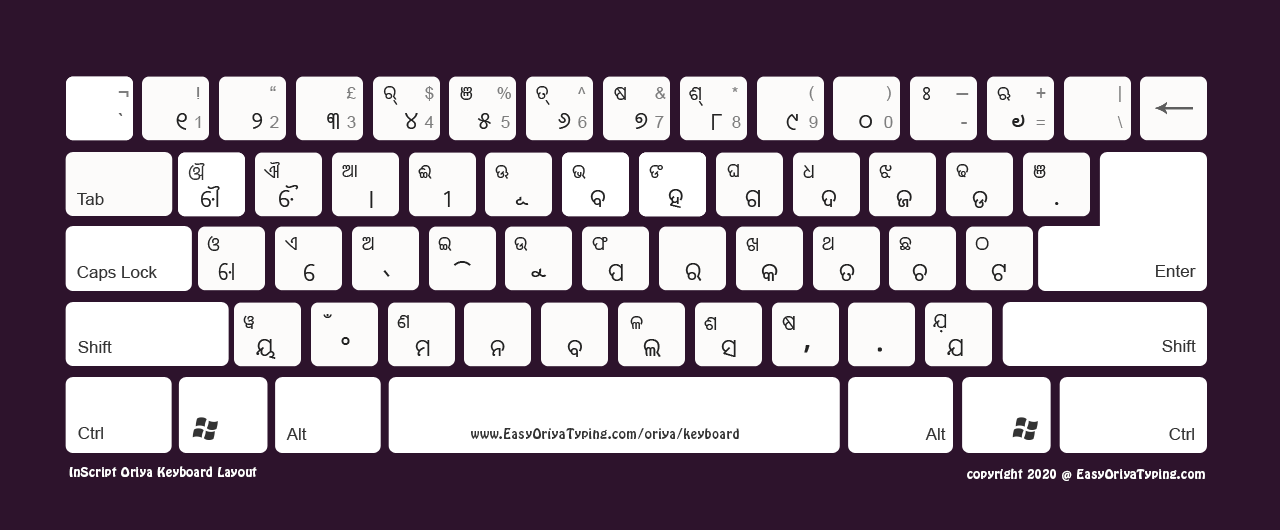
High resolution image suitable for printing.
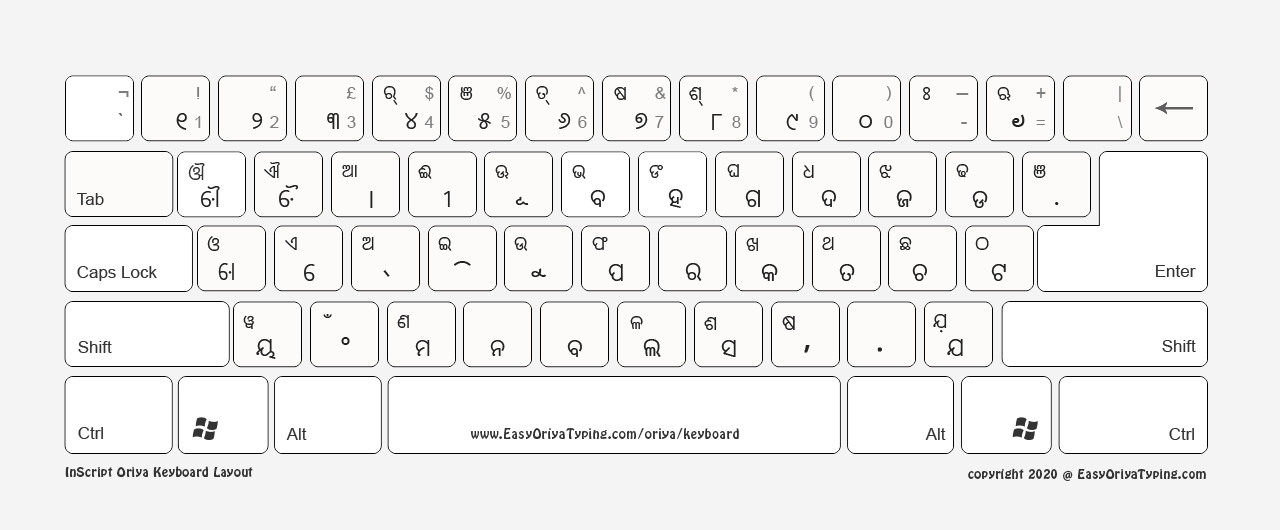
Getting started with Oriya typing is simple! Follow our step-by-step process.
Install Odia font — head over to our extensive fonts repository and install your preferred typeface.
Download your ideal keyboard image through this simple downloading process:
Browse and click on your preferred keyboard style
Right-click anywhere on the enlarged image
Choose "Save image as..." and pick your storage location
Prepare your writing space by launching your go-to text application and activating the Oriya font you installed in step one.
Begin your Oriya writing journey! Display your keyboard reference image alongside your text editor for seamless typing guidance.
Space-saving tip: Working on a compact setup? Our high-resolution keyboards deliver stunning print quality — create a physical reference that's always within reach!
Ensures traditional accuracy — each layout preserves authentic Oriya script conventions and cultural writing traditions.
Offers complete flexibility — choose from multiple styles and backgrounds to match your personal or professional preferences.
Includes unrestricted usage rights — download, print, share, and modify for any purpose without limitations or hidden costs.
It is important to clarify from the outset that distributing or downloading copyrighted material such as the complete FLAC discography of Madonna without proper authorization is illegal in most jurisdictions. However, the keyword appears to be a structured search query often used on private music trackers, peer-to-peer networks, or specialized blogs to locate high-fidelity, lossless audio archives.
Madonna’s discography is a masterclass in pop evolution, from the dance-club grit of “Everybody” (1982) to the Latin-infused urgency of “Batuka” (2019). Experiencing it in FLAC is undeniably superior—but doing so legally ensures the Queen of Pop gets her royal due. This article is for educational and informational purposes only regarding file formats, search syntax, and music archiving standards. It does not endorse or promote piracy.
Below is a detailed informational article explaining what each component of this search string means, the technical aspects of FLAC, the significance of the “PMEDIA” tag, and the historical context of Madonna’s studio output for collectors. Introduction In the world of digital music collectors, search strings are a precise language. A query like “Madonna - Discography -FLAC- -PMEDIA- ---” is not random typing—it is a meticulously crafted command designed to filter results on indexed search engines, Usenet, or private music trackers (like REDacted, OPS, or older platforms like What.CD). This article breaks down each element, the artist’s monumental catalog, and the technical standards expected by audiophiles. Part 1: The Artist – Madonna (1958–present) Before analyzing the format and release group, we must acknowledge the subject. Madonna Louise Ciccone is the best-selling female recording artist of all time, according to Guinness World Records, with over 300 million records sold. Her discography spans 14 studio albums, numerous soundtracks, compilations, live albums, and remix collections.
 Sambhu Raj Singh ·