









Always in sync, even across episodes
No more "wait, let me pause" moments. Our sync engine keeps everyone frame-perfect—even when you binge multiple episodes in one party.

Start playing any video on Netflix, Disney+, or 10+ supported platforms.
Click the Flickcall logo on top right once video starts or hit the Flickcall icon on chrome toolbar. Your watch party is ready in one click.
Copy the party link and send it to your friends. They join with one click—no sign-up required.

Create watch parties on Netflix, Disney+, JioHotstar, JioHotstar, HBO Max, MAX, Hulu, Prime Video, Youtube, Zee5, Sony Liv, JioHotstar with Flickcall.

No more "wait, let me pause" moments. Our sync engine keeps everyone frame-perfect—even when you binge multiple episodes in one party.

Catch your friends gasping at plot twists. Share laughter in real-time. Video chat makes every watch party feel like you're on the same couch.

Install the extension, play any video, click the Flickcall icon. That's it—share the link and you're watching together.
When you pause video, your mic unmutes. When you play, it mutes. Smart Mic knows when you need to talk. No fumbling with buttons, just natural conversation.

We use peer-to-peer technology to connect you directly with your friends. Your video calls and chats are never routed through our servers unless direct connection is blocked*.
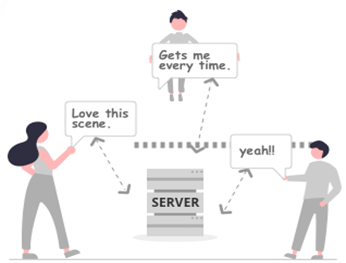
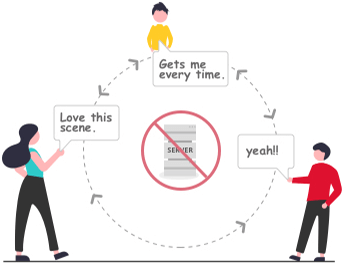
* In some cases, firewall setting doesn't allow direct connection, the calls and messages are encrypted and transmitted via routing servers.
Then, calculate total head: [ H = 358.5 , \text{ft} + 100 , \text{ft} + 10 , \text{ft} = 468.5 , \text{ft} ] The use of an XLS file for booster pump head calculations offers a systematic approach to pump sizing and system design. By accurately determining the required pump head, engineers and operators can select appropriate pumps, ensure efficient system operation, and avoid potential issues such as cavitation or over-pressurization.
For those involved in the daily operation and maintenance of pump systems, having a ready-to-use XLS file can significantly streamline calculations and support informed decision-making. Whether you're designing a new system or optimizing an existing one, a well-structured XLS for booster pump head calculations is an indispensable tool in your toolkit.
[ H = \frac{\Delta P}{\rho g} + H_e + H_f ]
In the realm of fluid dynamics and pump systems, accurately calculating the head required for a booster pump is crucial for ensuring efficient and effective operation. A booster pump, by definition, is a type of pump used to increase the pressure of a fluid (liquid or gas) in a system where the available pressure is insufficient for the intended application. These pumps are commonly used in water supply systems, HVAC (heating, ventilation, and air conditioning) systems, and industrial processes.
Then, calculate total head: [ H = 358.5 , \text{ft} + 100 , \text{ft} + 10 , \text{ft} = 468.5 , \text{ft} ] The use of an XLS file for booster pump head calculations offers a systematic approach to pump sizing and system design. By accurately determining the required pump head, engineers and operators can select appropriate pumps, ensure efficient system operation, and avoid potential issues such as cavitation or over-pressurization.
For those involved in the daily operation and maintenance of pump systems, having a ready-to-use XLS file can significantly streamline calculations and support informed decision-making. Whether you're designing a new system or optimizing an existing one, a well-structured XLS for booster pump head calculations is an indispensable tool in your toolkit.
[ H = \frac{\Delta P}{\rho g} + H_e + H_f ]
In the realm of fluid dynamics and pump systems, accurately calculating the head required for a booster pump is crucial for ensuring efficient and effective operation. A booster pump, by definition, is a type of pump used to increase the pressure of a fluid (liquid or gas) in a system where the available pressure is insufficient for the intended application. These pumps are commonly used in water supply systems, HVAC (heating, ventilation, and air conditioning) systems, and industrial processes.